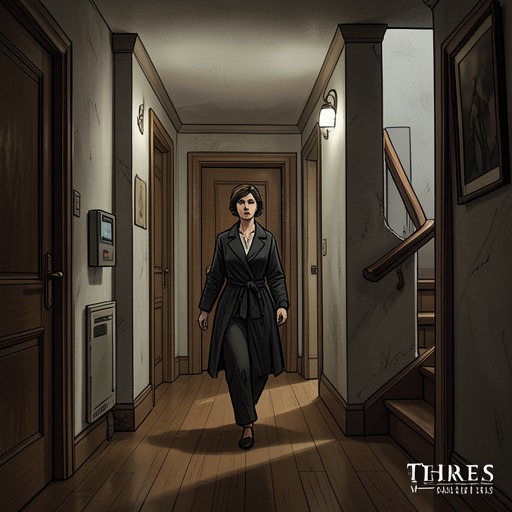
Rue des Fossoyeurs, Bonacieux's street
The Three MusketeersRue des Fossoyeurs, Bonacieux's street is more than the address of Monsieur Bonacieux’s apartment: it becomes a site of secret arrests, concealed observation, and escape. The house’s layout gives opposing sides different kinds of access, while the street outside carries Madame Bonacieux from confinement toward safety and exposes Athos to arrest. Its importance lies in how an ordinary Paris residence is made to serve as both a trap and a passage out of danger.
The house and its layout
The narrative identifies Monsieur Bonacieux’s apartment on Rue des Fossoyeurs as the center of a police operation known as a mousetrap. In the method described, officers keep an arrest secret, wait in ambush in the first room, admit those who knock, and then arrest them in turn. By repeating this procedure over two or three days, they can seize many of the establishment’s regular visitors. At Bonacieux’s address, the cardinal’s agents arrest and interrogate those who come to the apartment.
The building’s arrangement creates an exception to that system. A separate passage leads to the first floor, where d'Artagnan the younger lodges, so people visiting him are exempt from detention. The floor and passage divide the house into differently exposed spaces: the apartment below is under direct police control, while d'Artagnan the younger’s room remains accessible by another route. The distinction is consequential rather than merely architectural; it allows him to stay close to the investigation without being caught in the same net.
A space of surveillance and inquiry
d'Artagnan the younger turns his room into an observation point. From his windows he watches visitors being taken, and, after removing a floorboard, he listens to interrogations in the room below. The concealed opening makes the house’s vertical arrangement an information channel: the authorities use the rooms to detain and question people, while d'Artagnan the younger uses the space above to hear what they ask.
The interrogators search those arrested and repeatedly ask whether either Madame Bonacieux or Monsieur Bonacieux has sent anything, or entrusted anyone with a message. From the questions, d'Artagnan the younger infers that the agents are trying to establish whether the Duke of Buckingham is in Paris and whether he has met or may meet the queen. The house thus concentrates a political investigation into a domestic space. Its occupants and visitors are treated as possible links in a chain of communication, while the hidden listener can interpret the authorities’ questions without being seen by them.
The street also becomes a point in the conflict between the cardinal’s agents and the king’s men. Athos is arrested at the house on Rue des Fossoyeurs, and Cardinal Richelieu cites the arrest when challenging M. de Treville. The cardinal treats the address as a suspicious place for fraternization; M. de Treville counters that a friend may visit another friend, including a Musketeer visiting a Guard. The same house that provides d'Artagnan the younger with a listening post therefore supplies the cardinal with grounds for suspicion and confrontation.
Flight through the street
When Madame Bonacieux and d'Artagnan the younger flee the house, they descend Rue des Fossoyeurs rapidly, leave the door unclosed, turn into Rue des Fosses-Monsieur-le-Prince, and continue to Place St. Sulpice. The movement gives the street a sharply different function from its role in the arrests: rather than funneling visitors into custody, it carries two fugitives away from the watched residence. Their hurried departure also shows that the immediate priority is to get clear of the house before deciding where to go next.
Afterward, the pair seek a safer place to wait. They make their way to Athos’s apartment on Rue Férou, where d'Artagnan the younger lets Madame Bonacieux in with a key customarily available to him as a member of the household. He tells her to secure the door and admit no one unless she hears a particular three-part knock. The sequence links Rue des Fossoyeurs to a nearby world of guarded rooms and agreed signals: escape from the watched address is only the first step in evading surveillance.
Narrative significance
Rue des Fossoyeurs binds together the novel’s competing uses of domestic space. The cardinal’s people convert a private apartment into a mechanism for mass arrest; d'Artagnan the younger converts a room above it into an informal listening post; and Madame Bonacieux uses the street as the first leg of her flight. Athos’s arrest then makes the address a point of political accusation as well as police action.
The place’s significance comes from these overlapping routes and lines of sight, not from any description of the street as a landmark. Doors, a separate passage, a floorboard, and the route onward determine who can enter, observe, question, or escape. Rue des Fossoyeurs is consequently remembered in the plot as a vulnerable address where private life is penetrated by state power, but where the building’s very divisions also leave openings for resistance and flight.